Electronic Components Sales Market Analysis and Forecast (Q2 2026)
Table Of Contents
Prologue
1 Macroeconomy & Semiconductor Trade
1.1 Macroeconomic Review
(1)Global Manufacturing Expands with Widening Divergence
(2)China’s Electronic Manufacturing: Improving Margins & Resilient Exports
(3)Structural End-Market Divergence & Inventory Build-Up
1.2 Semiconductor Market Overview
(1)Record-Breaking Volume & Prices Propel Upcycle Acceleration
(2)Booming Semiconductor Trade with Surging Export Growth
(3)Semiconductor Benchmark Indices Rally to All-Time Highs
1.3 Chip Lead Time & Pricing Dynamics
(1)Broad Lead-Time Extension and Upbeat Price Outlook
(2)Aggregated Supplier Lead-Time Trends
1.4 Manufacturer Order & Inventory Analysis
2 Semiconductor Supply Chain
2.1 Upstream Players
(1)Semiconductor Equipment & Silicon Wafers: Higher Volume and Margins
(2)IDM/Fabless Chip Suppliers: Profitability Near Historic Peaks
(3)Foundry: Dual Revenue & Profit Expansion
(4)OSAT: Margin Recovery Underway
2.2 Distributors: Explosive Earnings Expansion
2.3 System Integrators: Mixed Profitability Profiles
2.4 End-Market Vertical Breakdown
(1)Consumer Electronics: Revenue Inflated by Component Price Hikes
(2)New Energy Vehicles: Compressed Margins
(3)Industrial Control: Intensifying Competitive Pressures
(4)Photovoltaic: Persistent Industry-Wide Losses
(5)Energy Storage: Emerging Inventory Risks
(6)Data Centers: Explosive Profit Upside
(7)Communications: Deepening Margin Contraction
(8)Medical Devices: Stable Defensive Demand
3 Distribution and Sourcing Opportunities and Risks
3.1 Investment & Sourcing Opportunities
3.2 Downside Risk Factors
4 Concluding Remarks
Disclaimer
Prologue
1 Macroeconomics and Semiconductor Trade
1.1 Macroeconomic Review
(1)Global Manufacturing Expands with Widening Divergence
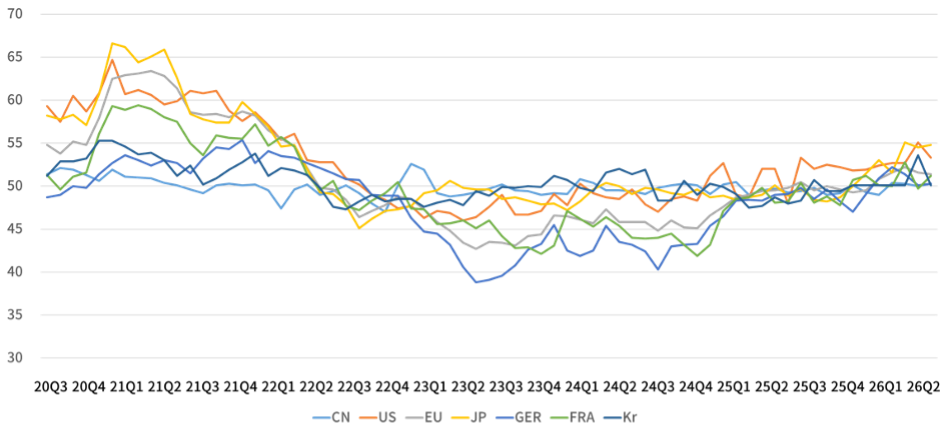
Global manufacturing stayed in expansion territory through Q2 2026, marked by an early rebound followed by fading momentum and growing cross-region divergence. All major economies posted broad-based expansion in April, yet manufacturing activity cooled sharply across the U.S., South Korea, EU and other markets from May to June.
Backed by AI-driven demand and inventory restocking, the manufacturing sector maintained solid prosperity. However, weakening new export orders and the onset of proactive destocking have capped expansion momentum, creating uneven performance across economies.
For Q3 2026, global manufacturing faces a transition from inventory-fueled pseudo recovery to genuine demand-led stress tests. Key headwinds include softening external demand, recurring geopolitical frictions and uncertain trade rules that could disrupt supply chains.
Chart 1: Global Manufacturing PMI by Major Economy, Q2 2026
Source: NBSPRC
(2)China’s Electronic Manufacturing: Improving Margins & Resilient Exports
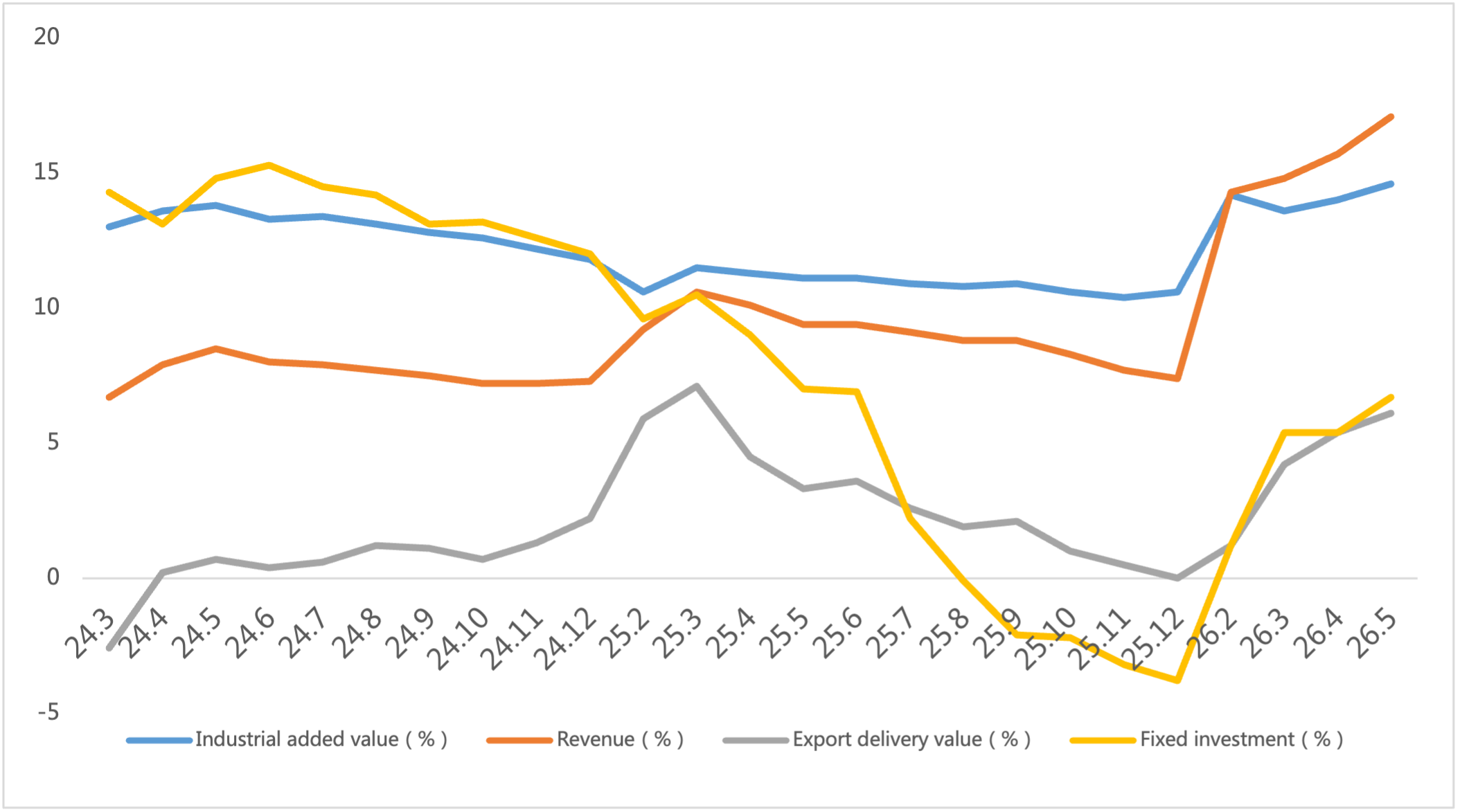
January–May 2025 saw robust output growth, steady export performance, stronger profitability and accelerating investment within China’s electronic information manufacturing sector, pointing to a healthy industry backdrop overall.
Chart 2: Latest Operating Metrics of China’s Electronic Information Manufacturing Industry
Source: MIIT
(3)Structural End-Market Divergence & Inventory Build-Up
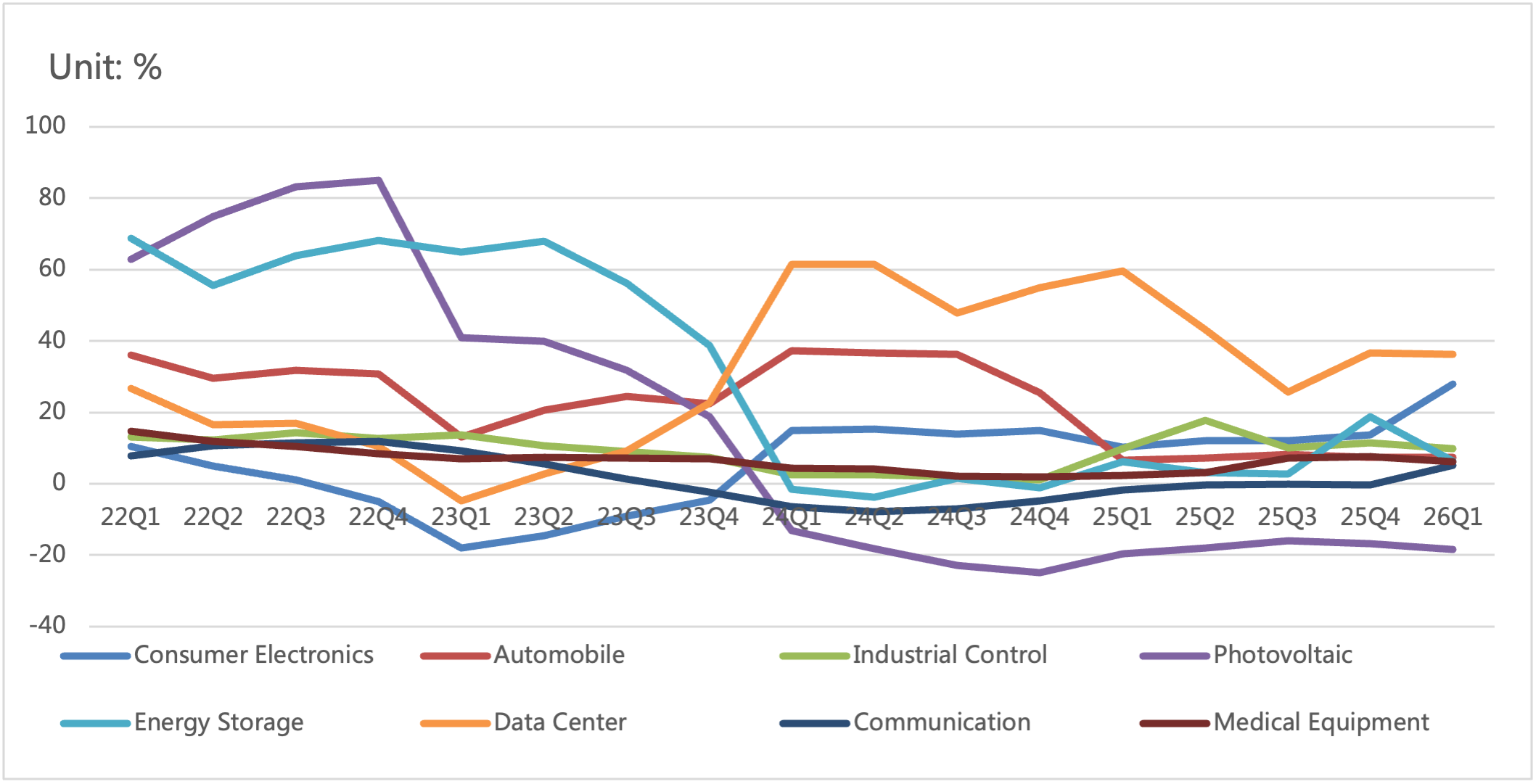
Downstream segments displayed stark differentiation: data centers and energy storage outperformed, while PV and communications faced persistent pressure with widening margin gaps. Accelerated construction of AI compute infrastructure positioned data centers as the top gainer in revenue growth.
Chart 3: Average Revenue Growth of End-Market Players
Source: Chip Insights
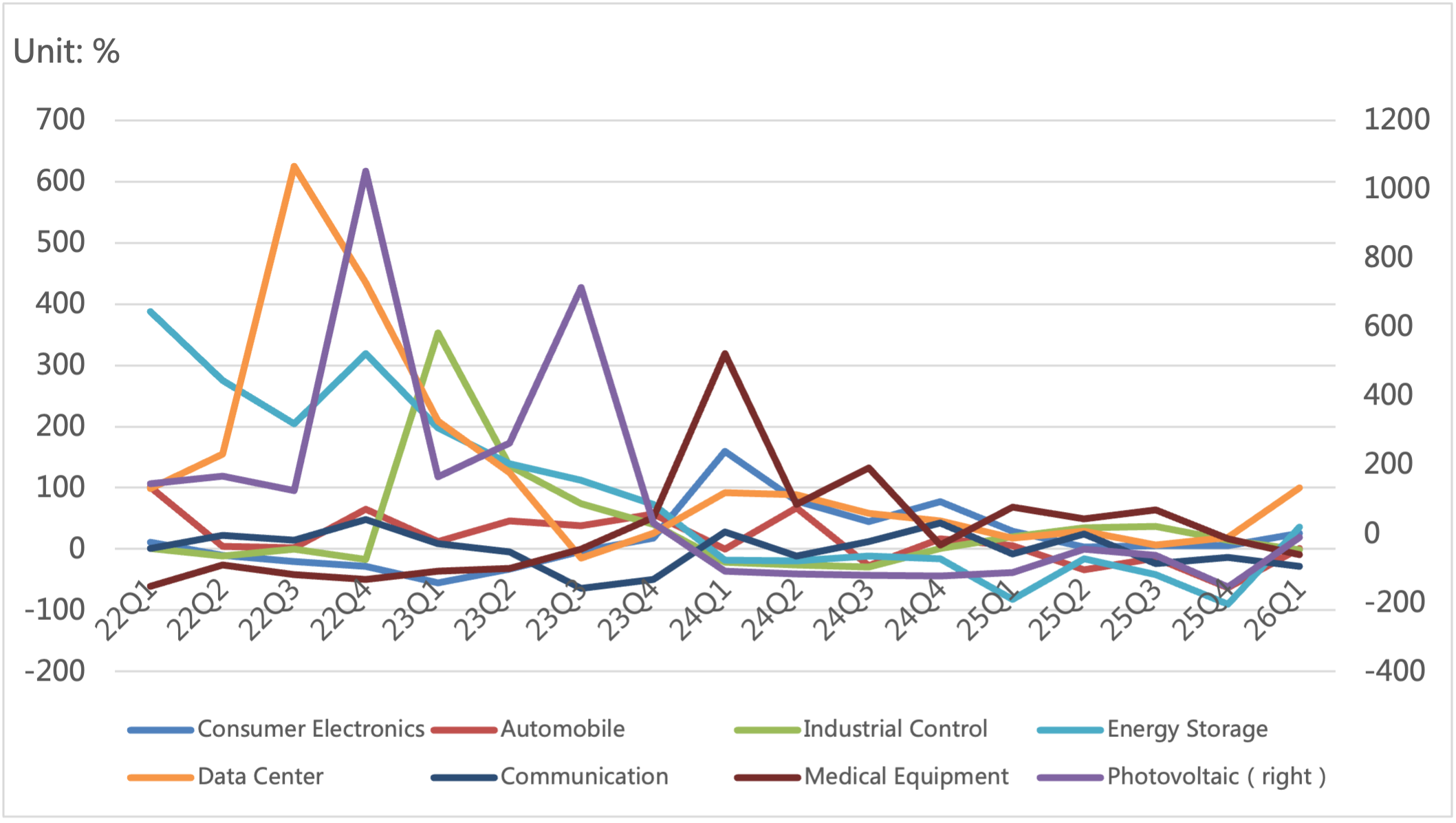
On net profit, energy storage and consumer electronics delivered notable margin recovery, while PV losses narrowed modestly.
Chart 4: Average Net Profit Growth of End-Market Players
Source: Chip Insights
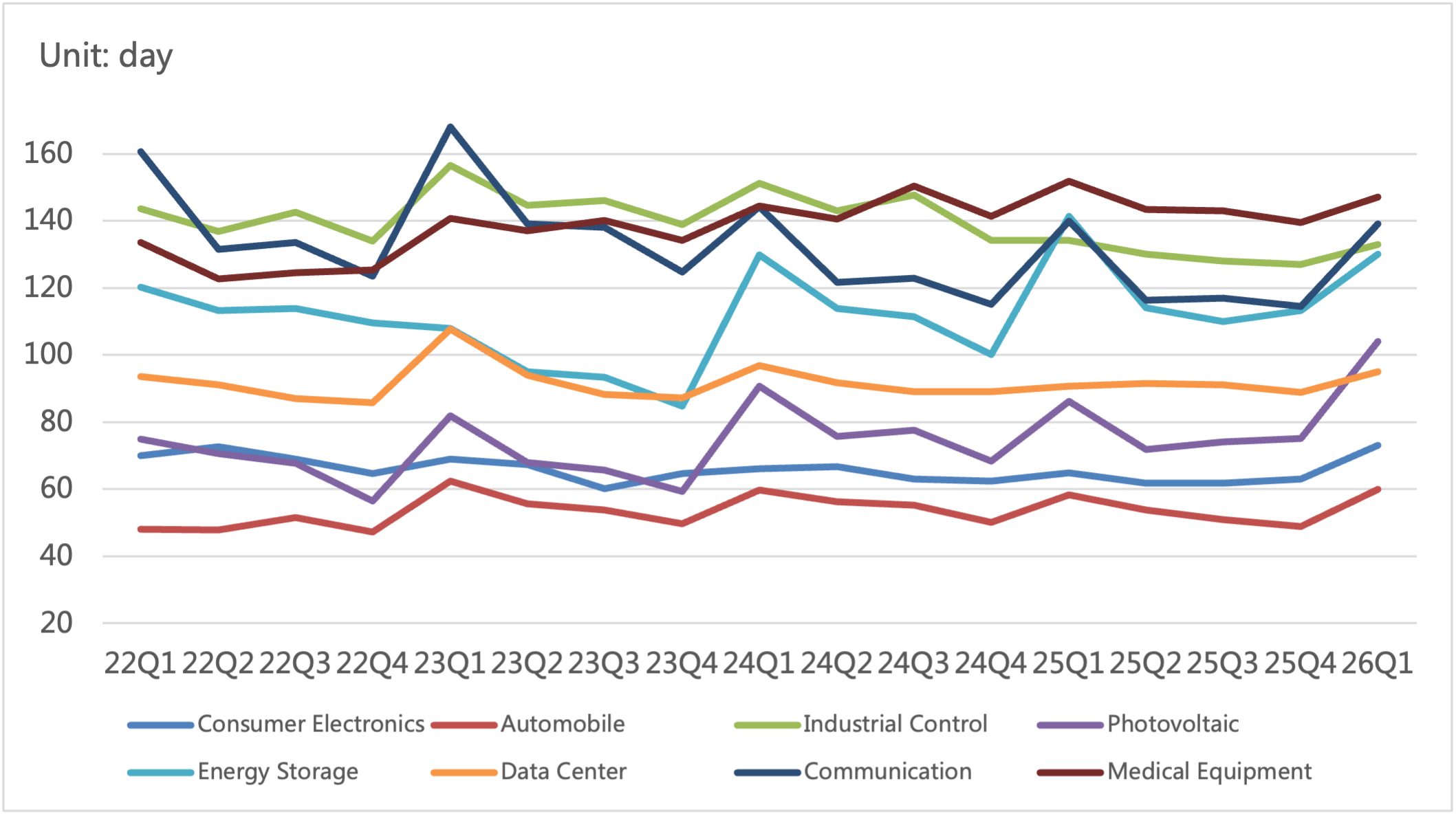
Inventory levels rose sequentially across nearly all verticals, representing intentional restocking amid the industry upcycle.
Chart 5: Average Inventory Trend of End-Market Players
Source: Chip Insights
For more information, please refer to the attached report.